

What Is Abstract Mountain Art? A Guide to Contemporary Mountain Painting
There is something about mountains that is difficult to capture in a photograph.
The scale, changing light, atmosphere and feeling of standing beneath a mountain can be far more powerful than the details of the landscape itself. Abstract mountain art explores this feeling by simplifying, exaggerating or reimagining the landscape through colour, shape, texture and composition.
Rather than creating a completely realistic representation of a mountain, abstract and semi-abstract mountain paintings can capture the mood and atmosphere of being there.
From minimalist mountain silhouettes to expressive, textured landscapes, contemporary mountain art offers a different way to bring the feeling of the mountains into your home.
What is abstract mountain art?
Abstract mountain art is artwork inspired by mountainous landscapes that moves away from a purely realistic representation of the scene.
The mountain may still be recognisable, but elements such as its shape, colour, scale, texture or surrounding landscape can be simplified or exaggerated.
Instead of recreating every rock, tree or ridge exactly as it appears, an artist might use a few strong shapes to suggest a mountain range, layers of colour to create distance, or expressive brushwork to capture changing weather and light.
This allows the painting to communicate something beyond what the landscape simply looks like - it can capture how that landscape feels.
As an abstract mountain artist, I draw on my own experiences trekking in high-altitude places, such as the Himalayas, Andes and Alps, to express not what a mountain looks like but how it feels. This could be the weather, the light, the vastness of the sky and the majesty of the mountains.
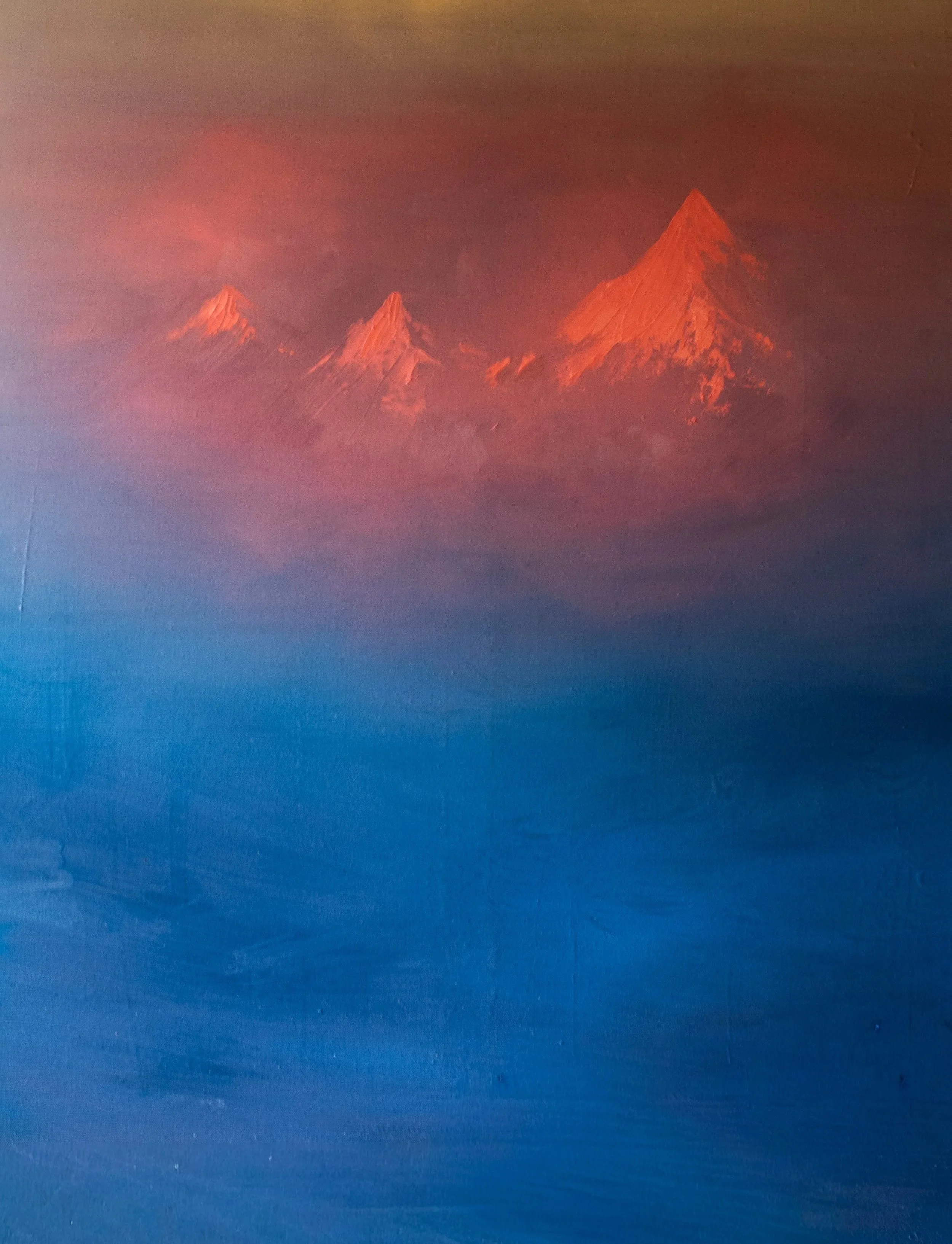
Fire Summit abstract mountain painting by Cat Goward
What makes a mountain painting abstract?
Abstract mountain paintings exist on a spectrum.
Some are almost completely abstract, using colour and geometric forms to suggest the landscape. Others are semi-abstract, where the mountain remains clearly recognisable but the artist takes creative liberties with the surrounding colours, textures and shapes.
Common characteristics include:
Simplified mountain shapes rather than highly detailed peaks
Expressive colour palettes that don't necessarily replicate the landscape exactly
Layers and texture to create atmosphere and depth
Minimalist compositions that remove unnecessary details
Exaggerated light and colour inspired by sunrise, sunset or changing weather
Abstract foregrounds and skies contrasted with recognisable mountain forms
This freedom allows the artist to interpret a landscape rather than simply reproduce it.
Explore my INTO THIN AIR collection of original abstract mountain paintings.
Abstract vs realistic mountain paintings
The biggest difference between realistic and abstract mountain art is the artist's intention.
A realistic mountain painting usually attempts to represent a landscape faithfully. The proportions, colours, light and details closely resemble the real location.
An abstract mountain painting can begin with exactly the same landscape but interpret it differently.
A mountain ridge might become a single dark silhouette. A sunset could become large areas of pink, burgundy and orange. Clouds might be created through layers of paint rather than carefully rendered individual forms.
Neither approach is necessarily better - they simply create a different experience.
Abstract mountain art gives the artist more freedom to emphasise emotion, atmosphere and memory rather than geographical accuracy.
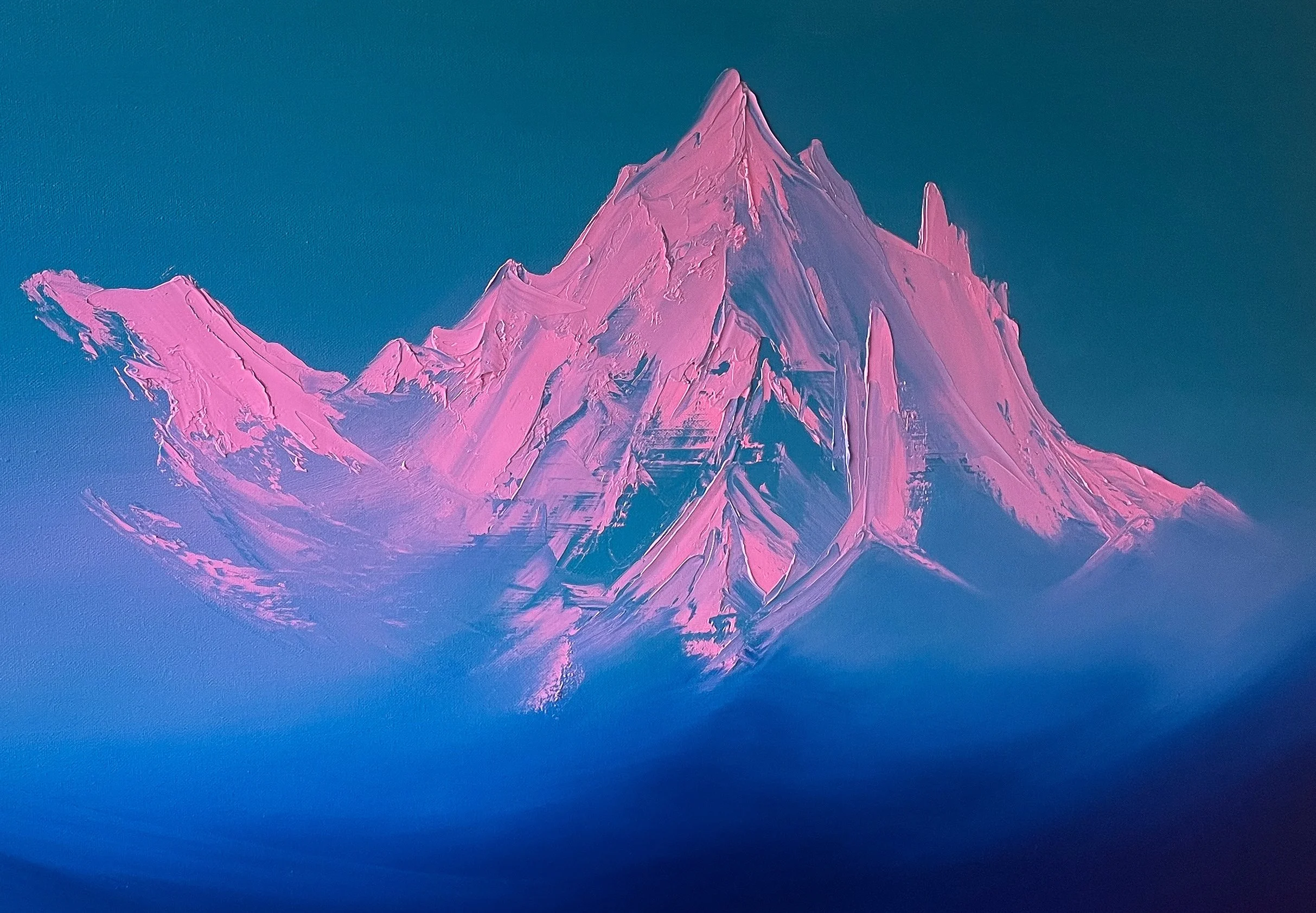
Mount Kenya abstract mountain painting by Cat Goward
Different styles of abstract mountain art
Minimalist mountain art
Minimalist mountain paintings strip the landscape back to its essential forms.
A painting might consist of a simple mountain silhouette against a large atmospheric sky, using negative space and a limited colour palette to create a calm contemporary feel.
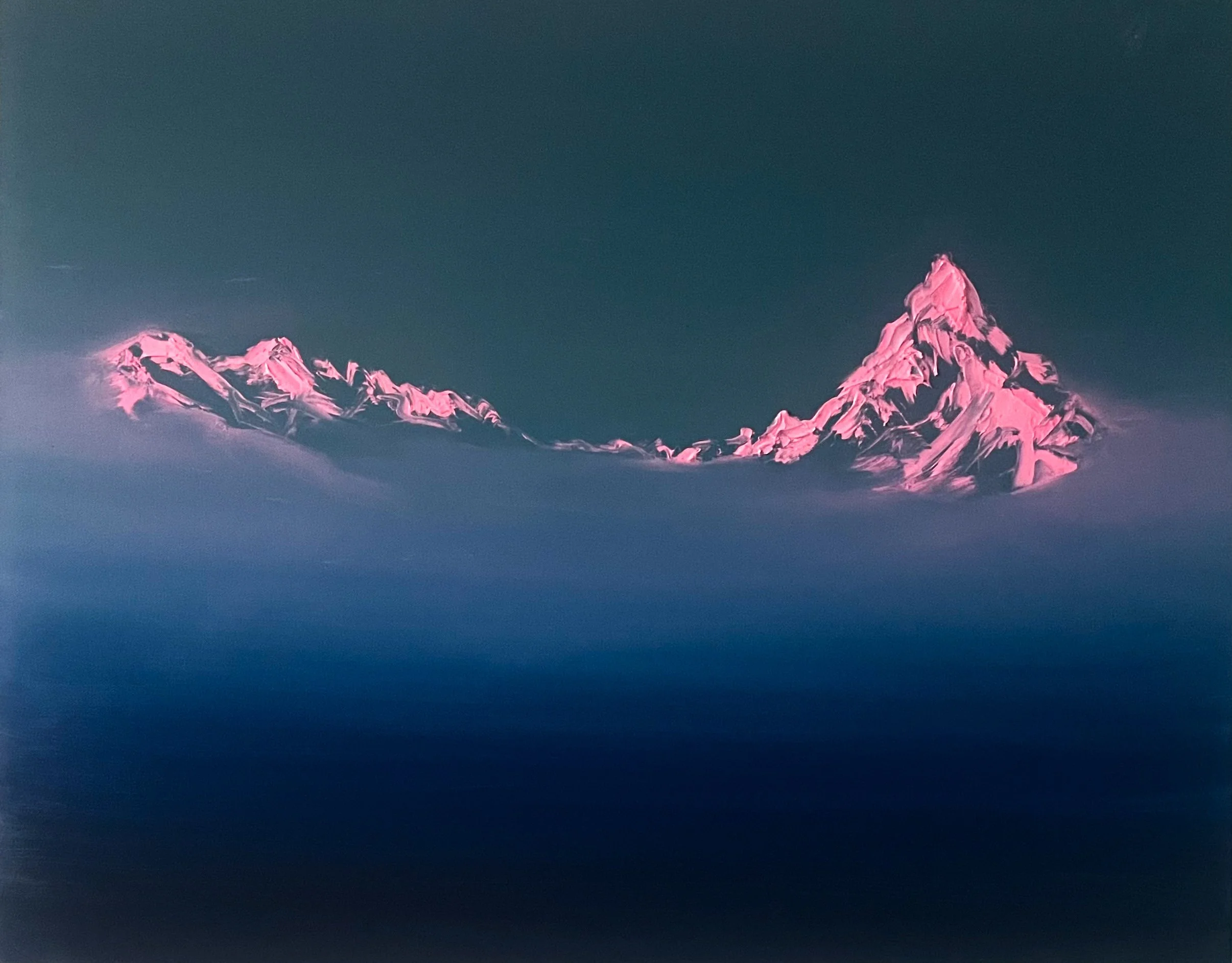
Annapurna in Rose abstract mountain painting by Cat Goward
Atmospheric mountain paintings
Atmospheric paintings focus heavily on light, weather and distance.
Layers of mountains can gradually disappear into mist or clouds, creating a sense of depth and the feeling of looking across a vast mountain landscape.
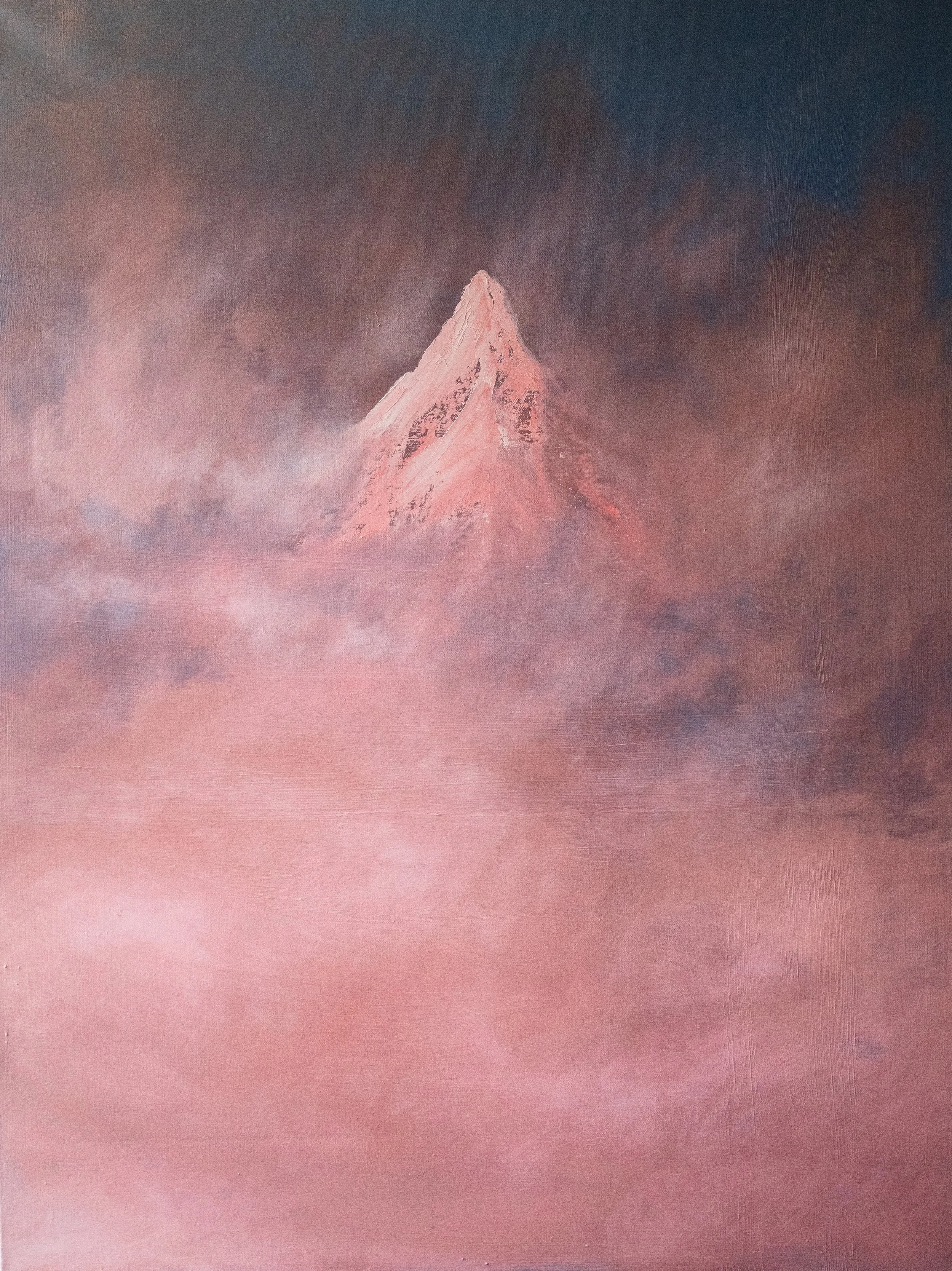
Blush Summit through the Clouds abstract mountain painting by Cat Goward
Expressive abstract mountain paintings
More expressive work can use bold brushwork, thick paint, unusual colours and texture.
The mountain becomes a starting point for the painting rather than something that needs to be represented precisely.
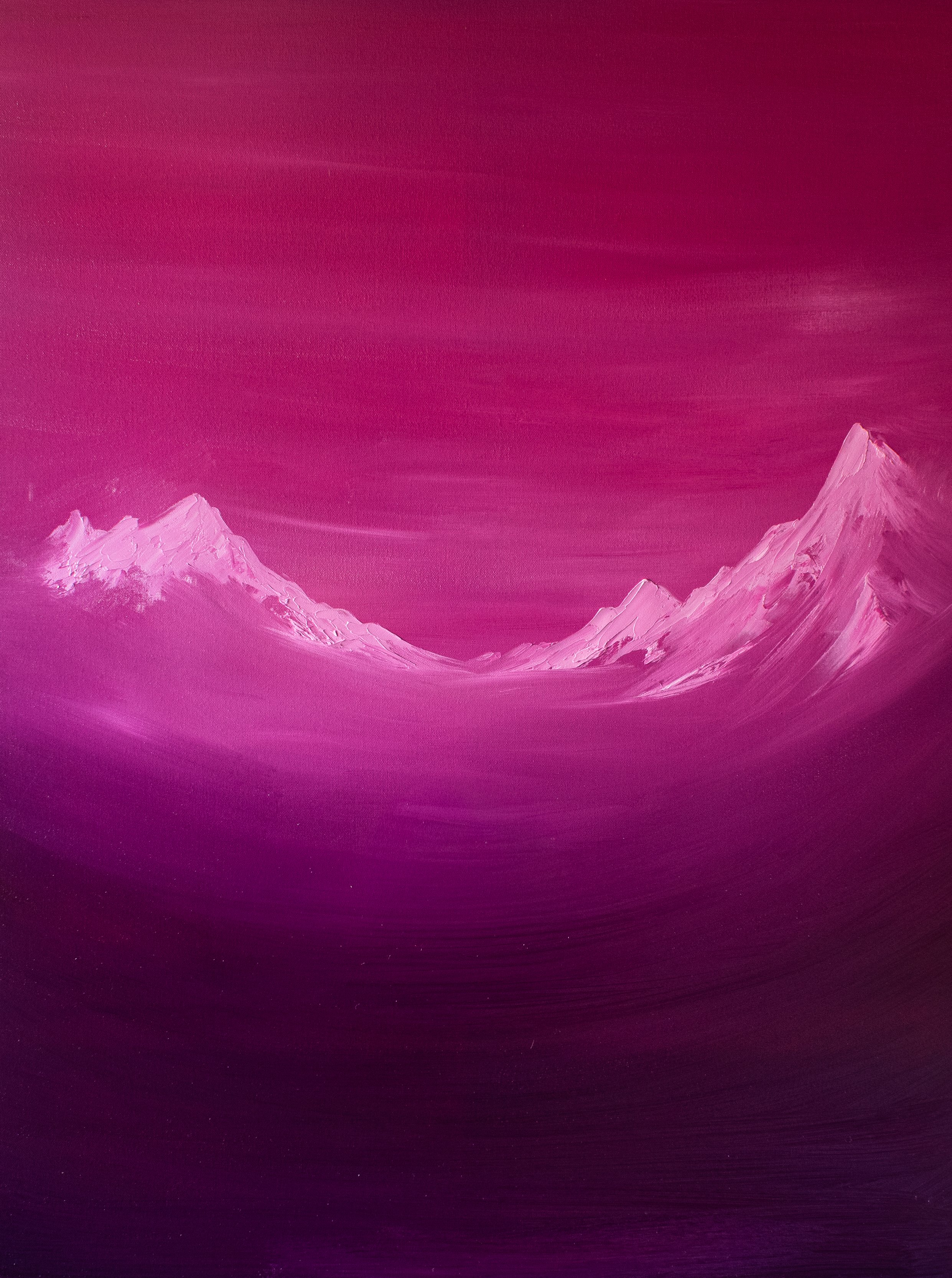
Velvet Valley abstract mountain painting by Cat Goward
Semi-abstract mountain paintings
Semi-abstract mountain art sits somewhere between realism and abstraction.
The landscape remains recognisable, but colours, shapes and textures are simplified or manipulated to create a more contemporary interpretation.
My own mountain paintings sit somewhere between abstraction and representation. Rather than recreating a landscape exactly as it appears, I use colour and texture to capture its atmosphere and feeling.
My work has a minimalist quality, stripping the landscape back to draw attention to the main event - whether that’s a mountain silhouette against a dramatic sky or snow-capped peaks glowing in the last light.
This simplicity also gives me more freedom to be adventurous with colour and composition, using unexpected palettes to express the mood of a place rather than simply reproduce what I see.
I use layers of translucent glazes to bring the composition together, build atmosphere and create a sense of depth and distance. In contrast, I use impasto to simplify and emphasise the mountain forms, using expressive texture to suggest glowing peaks, distant valleys and mountain ridges.
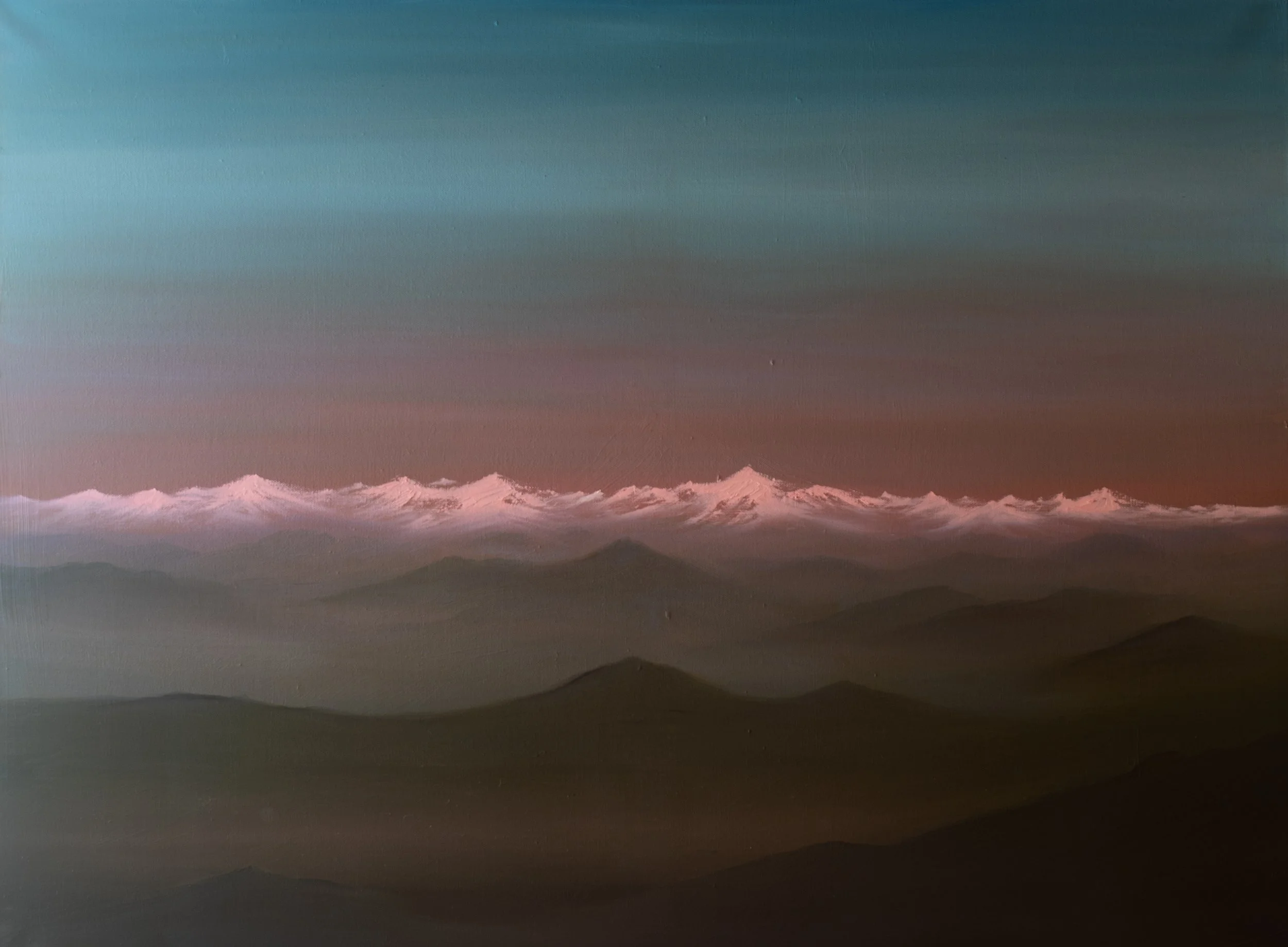
Beyond the Valley abstract mountain painting by Cat Goward
Why are artists drawn to mountains?
Mountains have been depicted in art for centuries, but their appeal goes far beyond their appearance.
They can represent adventure, solitude, freedom and perspective. They can also hold deeply personal memories.
A particular mountain might remind someone of a trek through the Himalayas, a childhood spent exploring the Alps, a climbing trip with friends or the place where they got engaged.
For artists, mountains also provide an almost endless source of inspiration because they are constantly changing.
The same peak can feel completely different depending on the weather, season or time of day. At sunset, a detailed mountain can suddenly become a dark abstract silhouette while the sky takes centre stage.
That transition between landscape and abstraction is one of the reasons mountains lend themselves so naturally to contemporary art.
I’ve always felt a sense of freedom and calm in the mountains. Everything seems to slow down, and I find myself noticing the landscape differently - the changing light, the contours of a ridge, the contrast of a dark silhouette against the sky, or the way snow-capped peaks change colour as the sun rises and sets.
Some of my strongest inspiration has come from these fleeting moments. Hiking the GR20 in 2025, I experienced incredible sunsets and early starts in the dark, watching the sun rise across Corsica’s rugged mountain landscape. On the Annapurna Circuit, it was the vastness that stayed with me - enormous peaks appearing almost to float against an endless blue sky, changing colour as the light moved across them.
The Tour du Mont Blanc gave me a completely different experience. The weather was terrible and, for much of the trek, the mountains were hidden behind cloud. But that made the brief moments when the peaks finally emerged even more dramatic. Those experiences later inspired paintings such as Blush Summit Through the Clouds and Summit Through the Storm.
Much of my work begins with memories like these. Rather than reproducing a particular view exactly, I use abstraction to interpret the light, atmosphere and emotion I remember from being there.
How colour changes abstract mountain art
Colour can completely transform the feeling of a mountain painting.
Deep blues and muted neutrals can create a sense of stillness and distance, while pinks, reds and oranges can capture the drama of the final light of the day.
Abstract artists aren't restricted to the exact colours found in the original landscape.
Instead, colour can be used to recreate a memory or feeling.
A fleeting pink glow on a snowy summit might become the focal point of an entire painting, while distant mountains might be simplified into progressively softer layers of blue.
Colour is one of the most important ways I interpret a mountain landscape. From the colours of the sky to the changing tones of the peaks, it can completely alter the mood of a painting. The mountain ranges I’ve experienced - from the Alps to the Himalayas - each have their own atmosphere, and colour allows me to express those differences without being restricted by realism.
The sunsets I experienced while hiking the GR20 were particularly memorable. Intense oranges, pinks and reds filled the sky, contrasted against mountain peaks that gradually became dark silhouettes stretching into the distance. Those moments became the inspiration for my latest collection, Last Light, which explores that transition between day and night when the landscape simplifies and the sky becomes the main event.
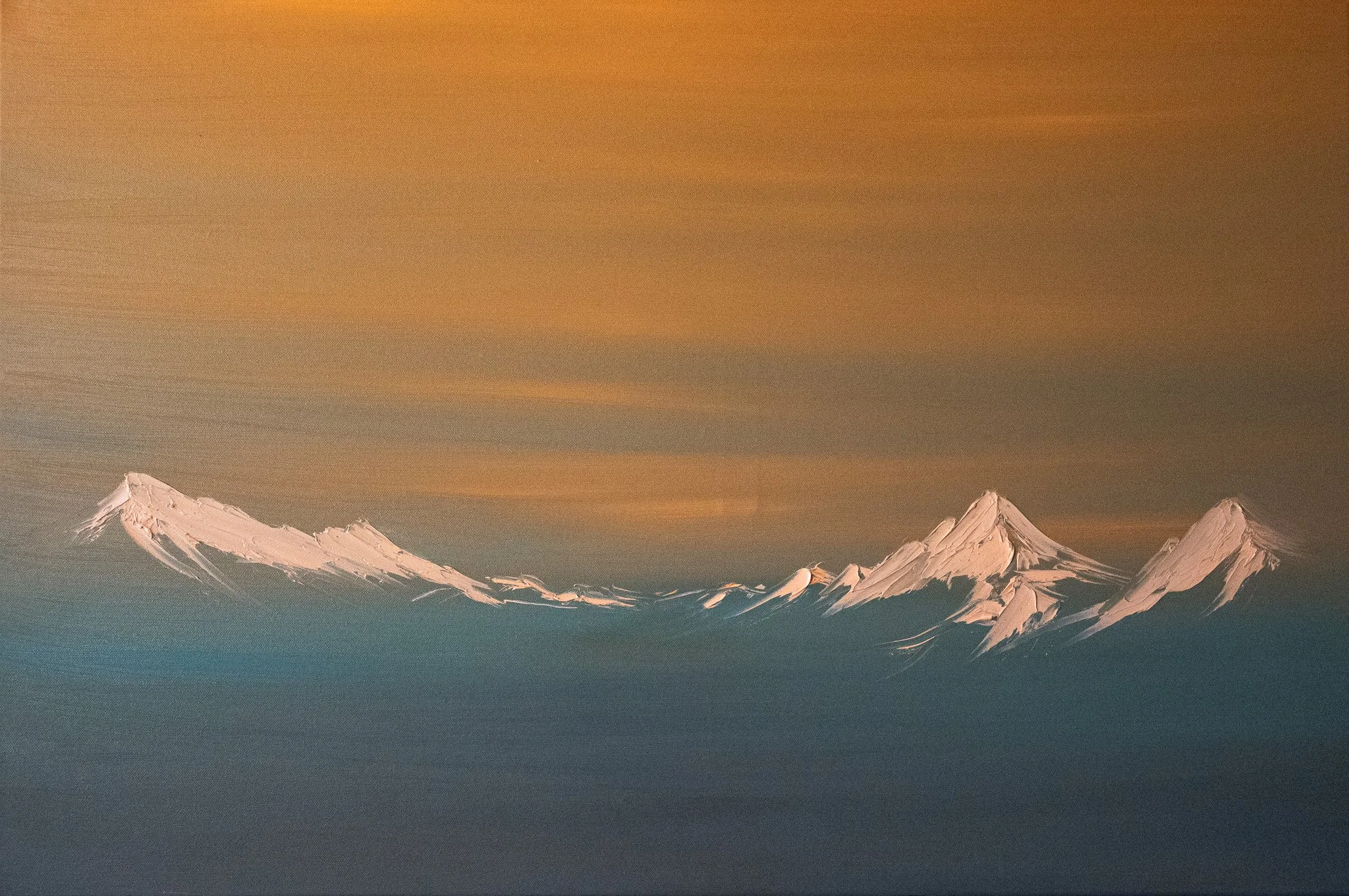
Valley in Afterglow abstract mountain painting by Cat Goward
Why choose abstract mountain art for your home?
Mountain artwork can bring a sense of space, calm and connection with nature into an interior.
Unlike a photograph of a particular mountain, abstract mountain art doesn't always need to be about recognising a specific location. Instead, it can remind you of a feeling - being above the clouds, watching the last light disappear behind a ridge or reaching the top of a mountain after a long climb.
Larger mountain paintings can become the focal point of a room, while quieter minimalist pieces can work particularly well in bedrooms and calmer spaces.
If you love the atmosphere of original mountain artwork but are looking for a more accessible option, explore my limited edition abstract mountain prints, reproduced from my original paintings.
When choosing a piece, consider not only the colours in your interior but also the feeling you want the artwork to create.
Choosing an original abstract mountain painting
If you're considering buying an original mountain painting, start by thinking about what draws you to the artwork.
Do you recognise the landscape? Does it remind you of somewhere you've travelled? Do you love the colour palette? Or does the atmosphere simply make you feel something?
You can then consider practical details such as:
Size: Large artwork can create a focal point above a sofa, bed or fireplace, while smaller paintings can work beautifully as part of a collection.
Colour: You don't necessarily need to match your artwork perfectly to your interior. A contrasting painting can often make a much stronger statement.
Orientation: Wide landscape paintings work particularly well above furniture, while portrait pieces can suit narrower walls.
Most importantly, choose a piece you genuinely connect with. Original artwork can live with you for decades
Explore INTO THIN AIR, my collection of original abstract mountain paintings inspired by the Himalayas, Alps and other mountain landscapes I've experienced on foot.
Can you commission an abstract mountain painting?
Yes. Commissioning a mountain painting can be particularly meaningful when you have a landscape or mountain connected to an important memory.
An artist can use your photographs, memories and ideas as the starting point for an original piece rather than simply copying a photograph.
This could be a mountain you climbed, somewhere you travelled, a honeymoon destination, the view from a family home or simply a landscape that has always felt like home.
Learn how to commission a mountain painting. Download my free guide below.
I’ve created commissioned mountain paintings from memories around the world - from Mount Kazbek in Georgia and Mount Kenya to Table Mountain in South Africa. Each began with a different story and a collection of personal photographs, which I used as the starting point for an original painting rather than simply reproducing a single image. Explore my mountain painting commission stories.
Contemporary abstract mountain paintings
For me, the most interesting mountain paintings aren't necessarily the ones that show every detail.
They're the ones that somehow recreate the feeling of standing there. That's what makes abstract mountain art so powerful: it doesn't have to show us everything to remind us what it feels like to be in the mountains.
The coldness of a distant summit. Clouds moving through a valley. The final light hitting a ridge. Or the moment when the mountains fall into silhouette and the sky becomes the focus.
That's what makes abstract mountain art so powerful: it doesn't have to show us everything to remind us what it feels like to be in the mountains.
